
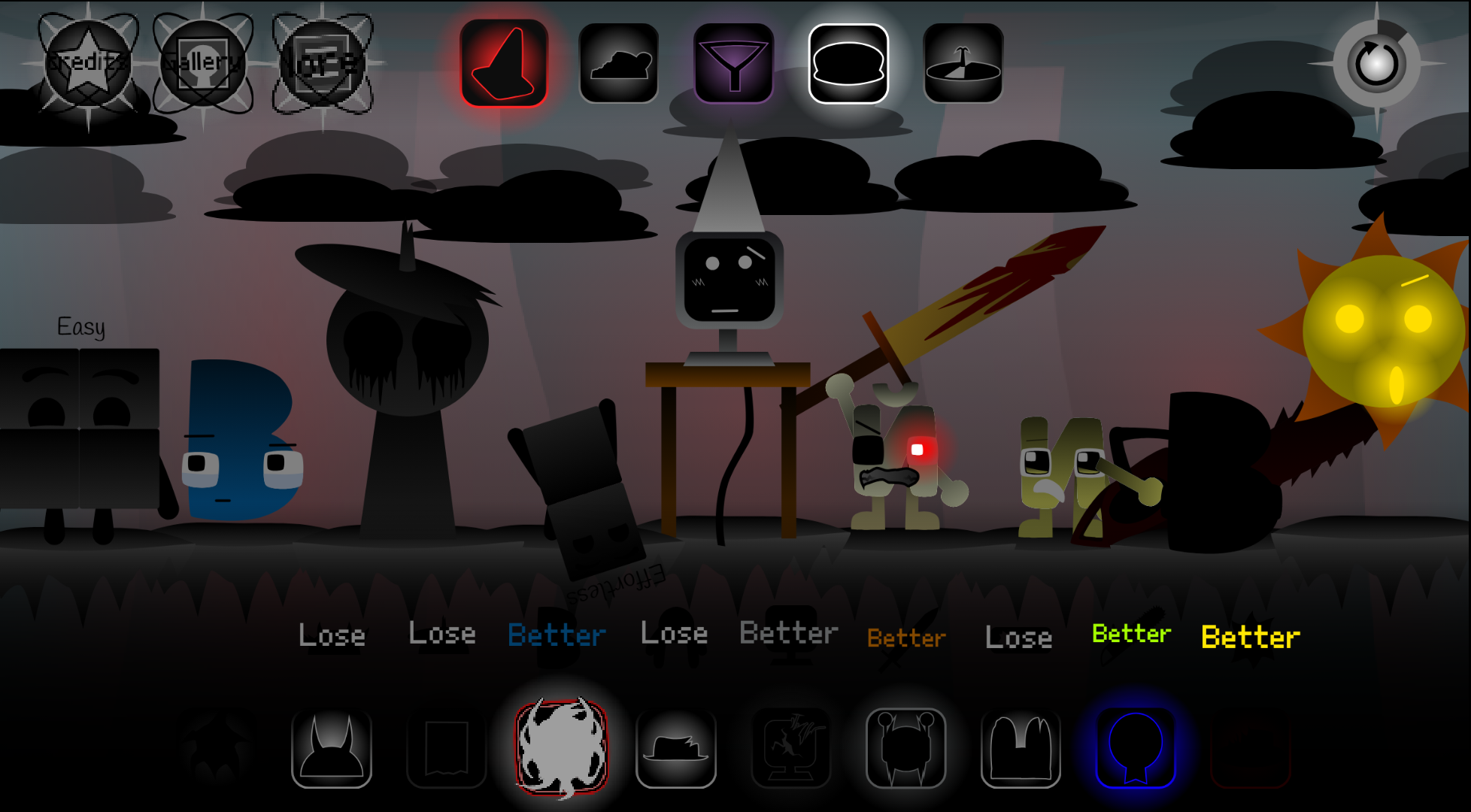
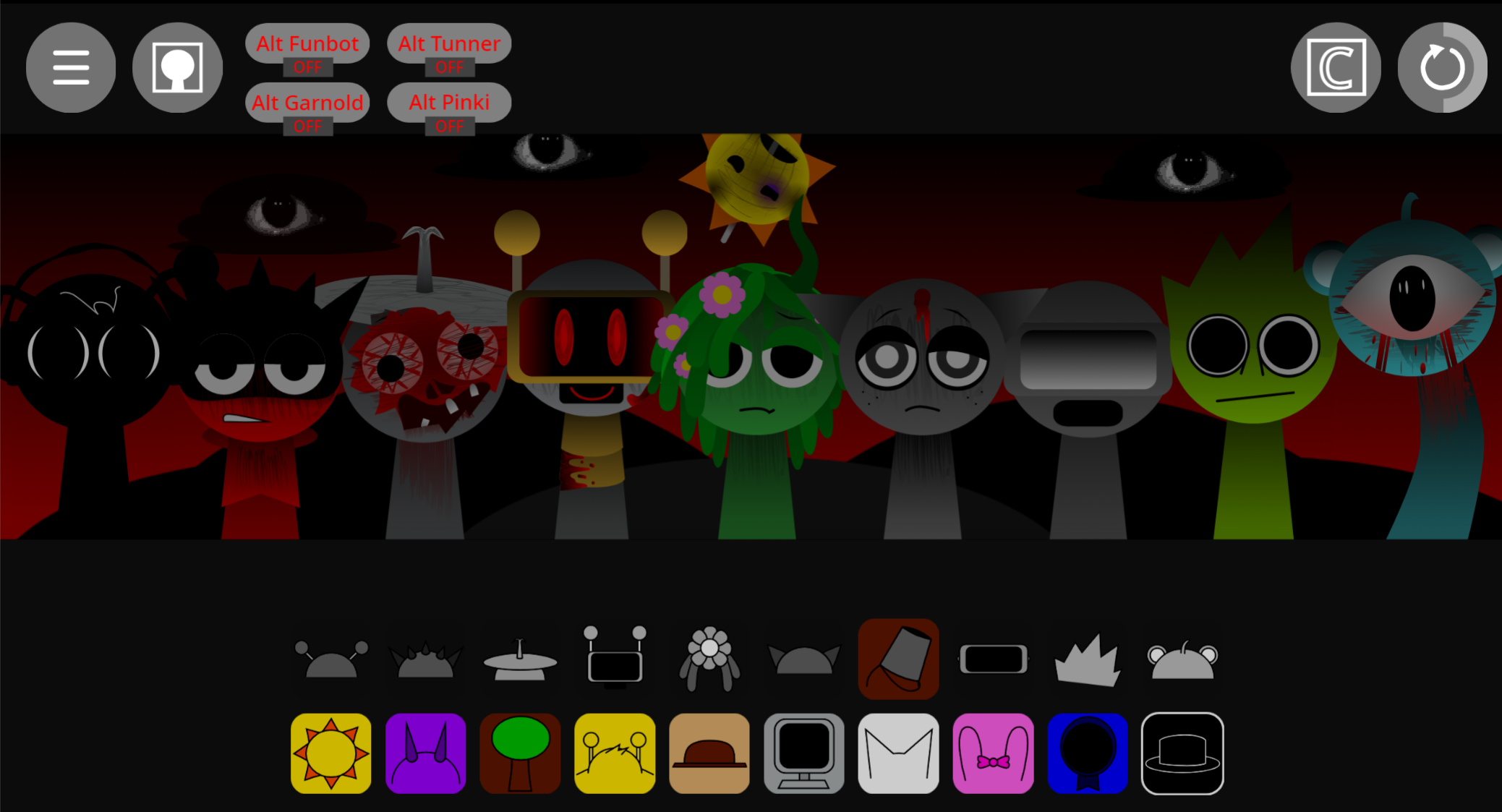
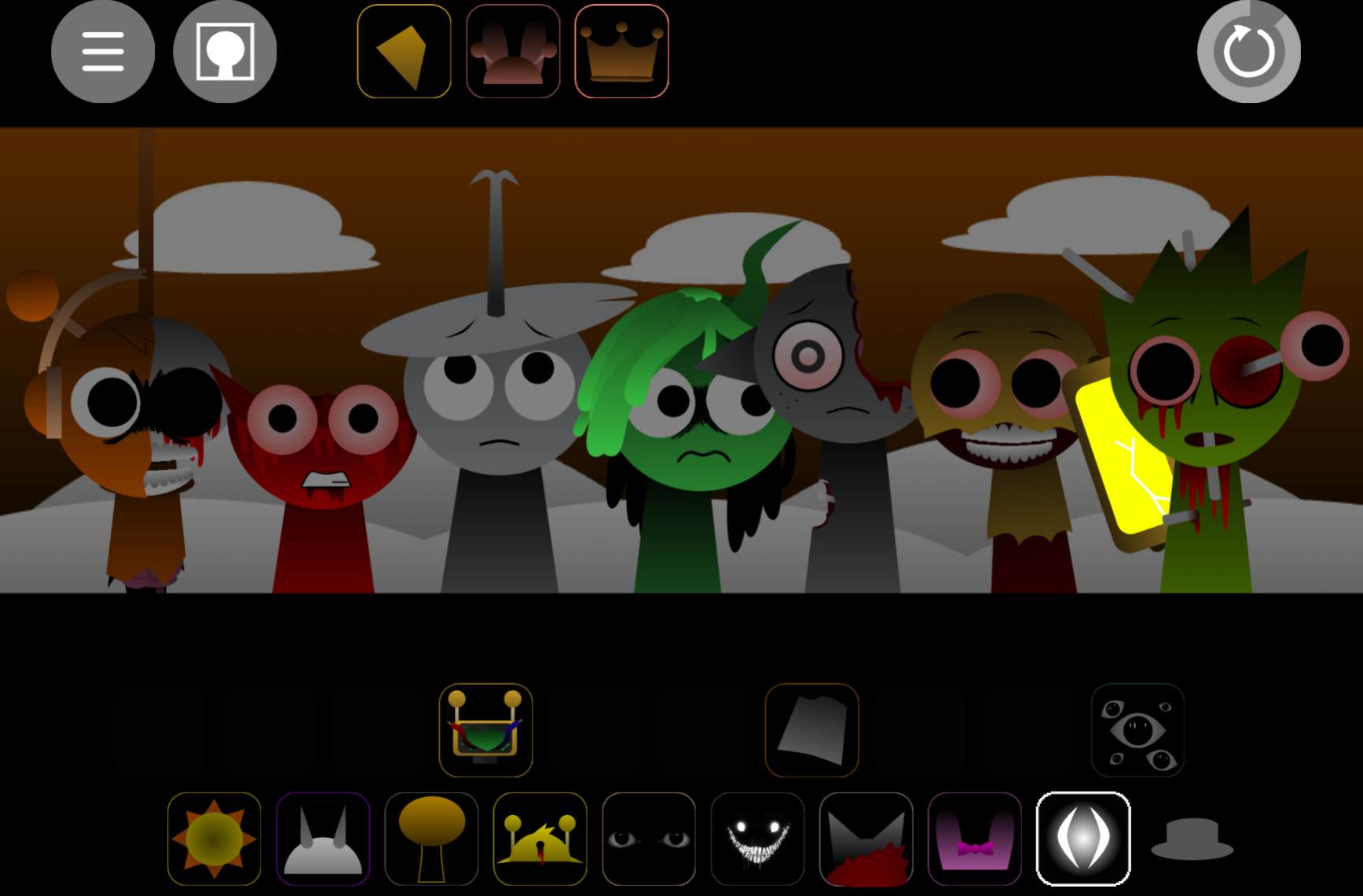


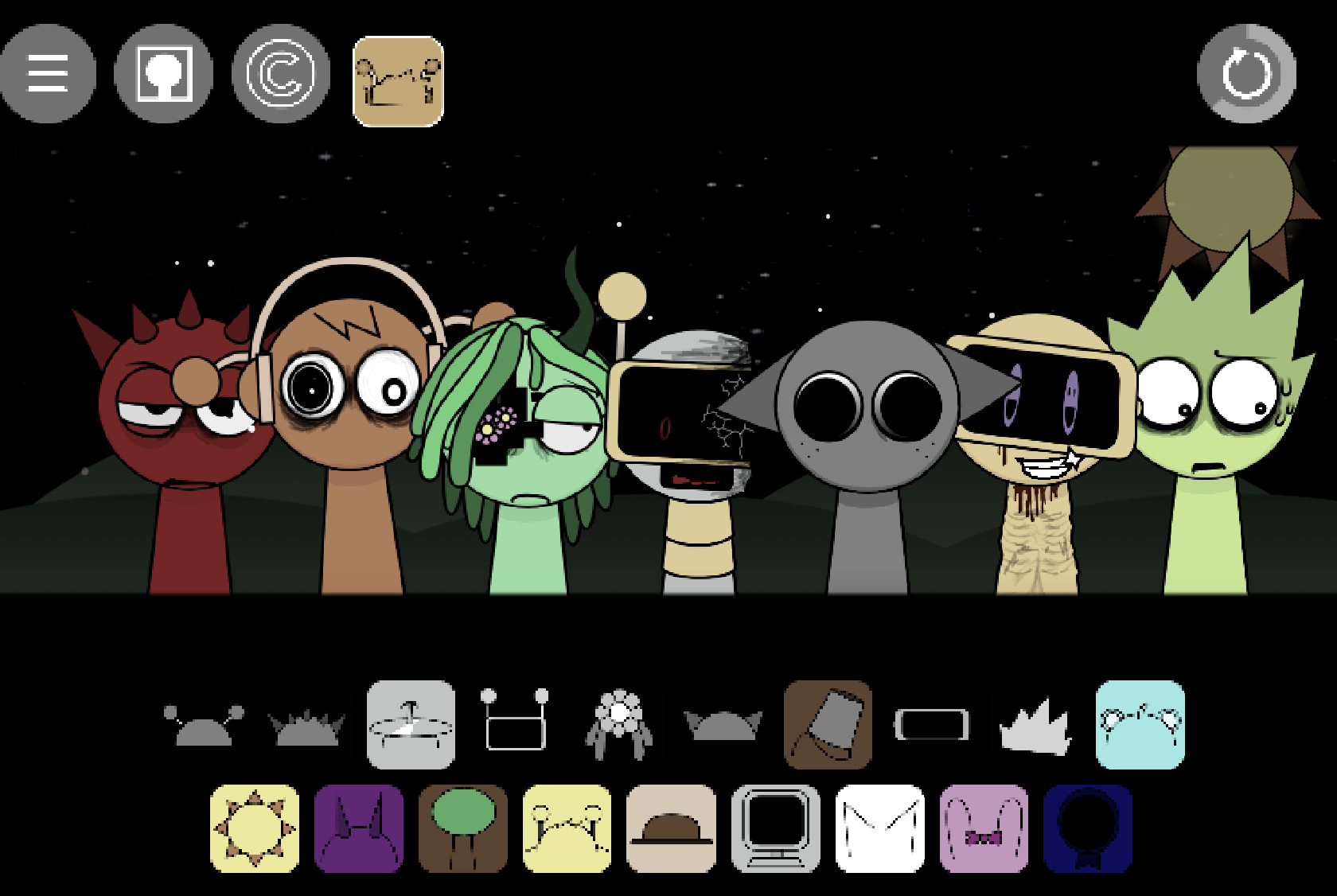
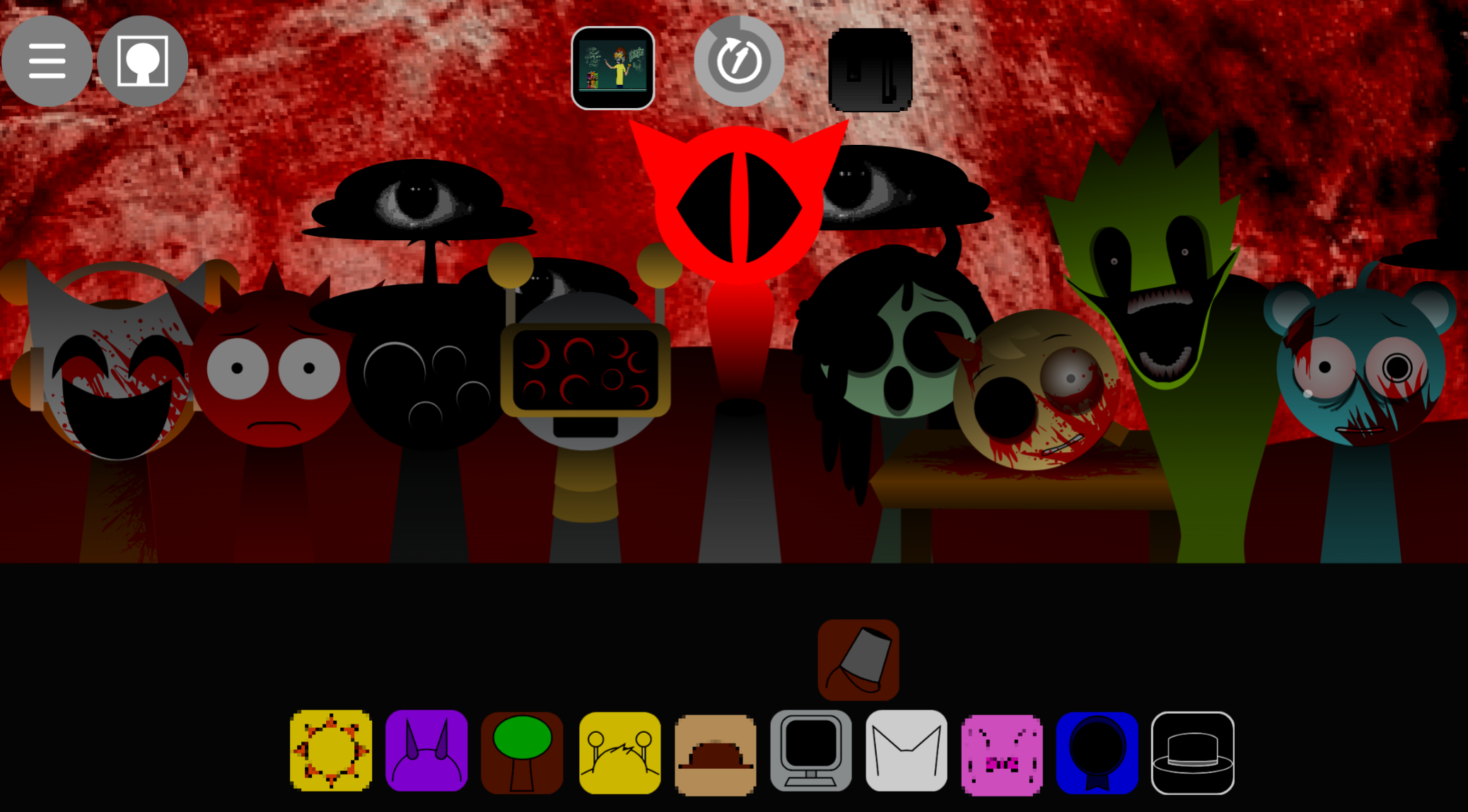
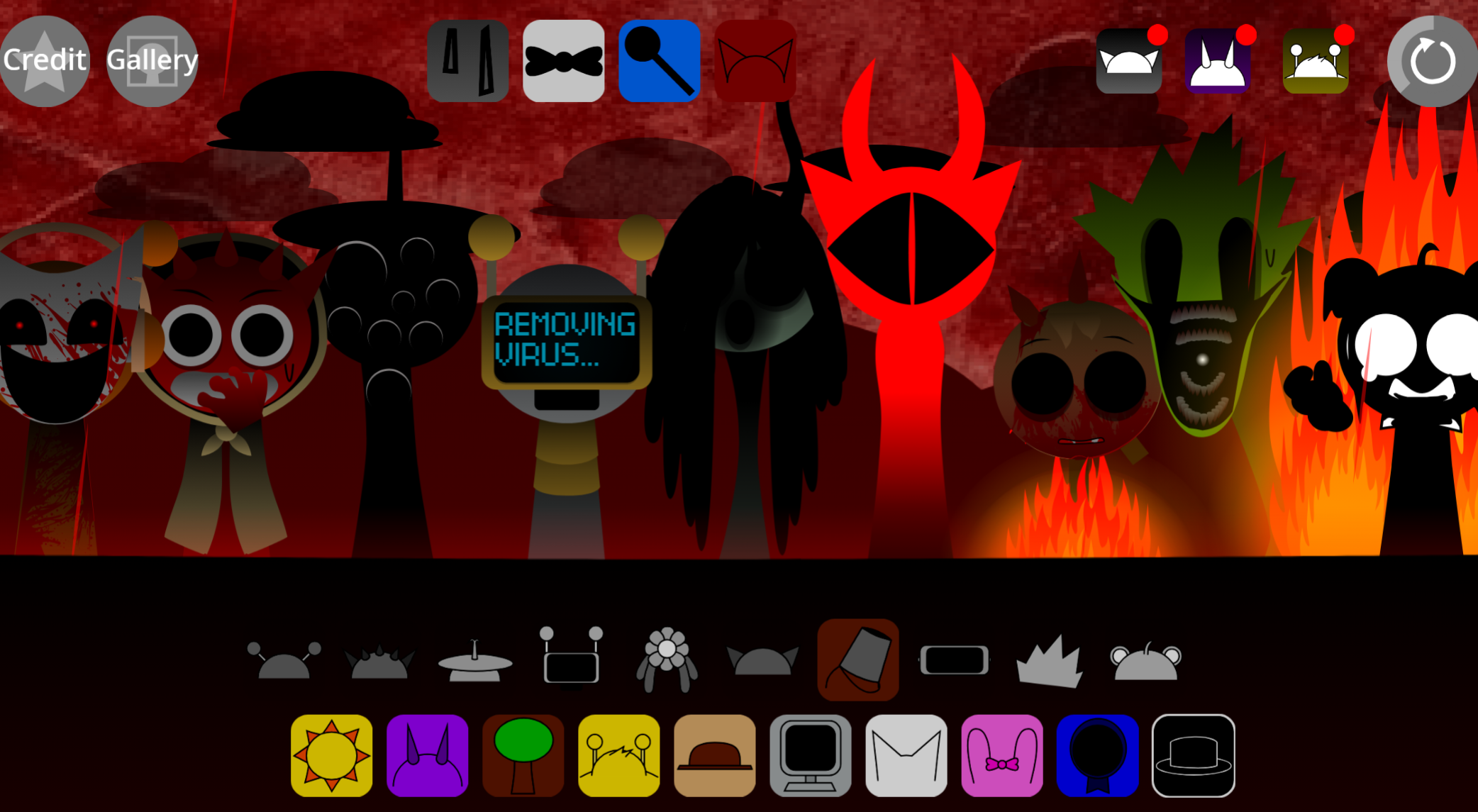
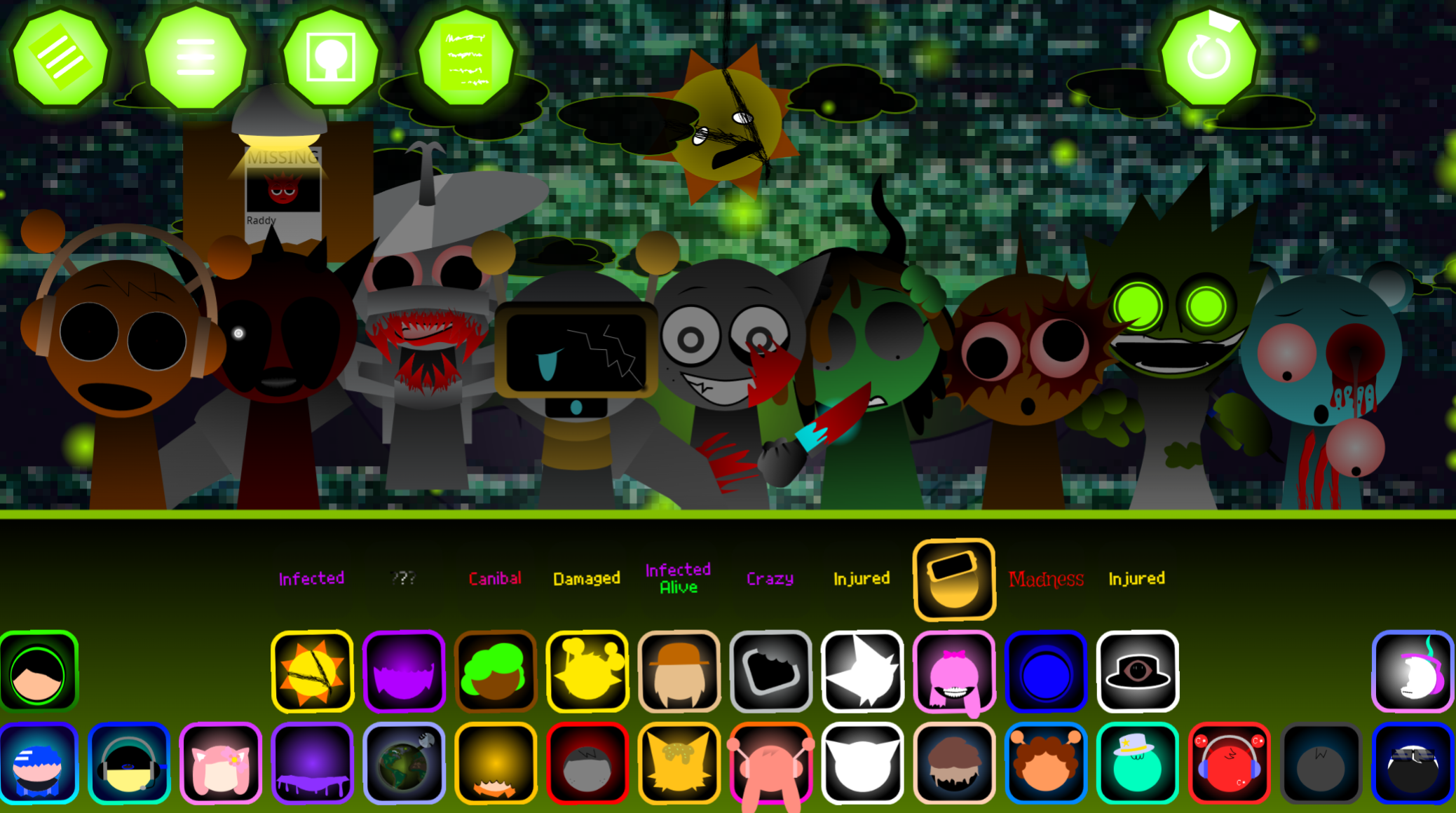
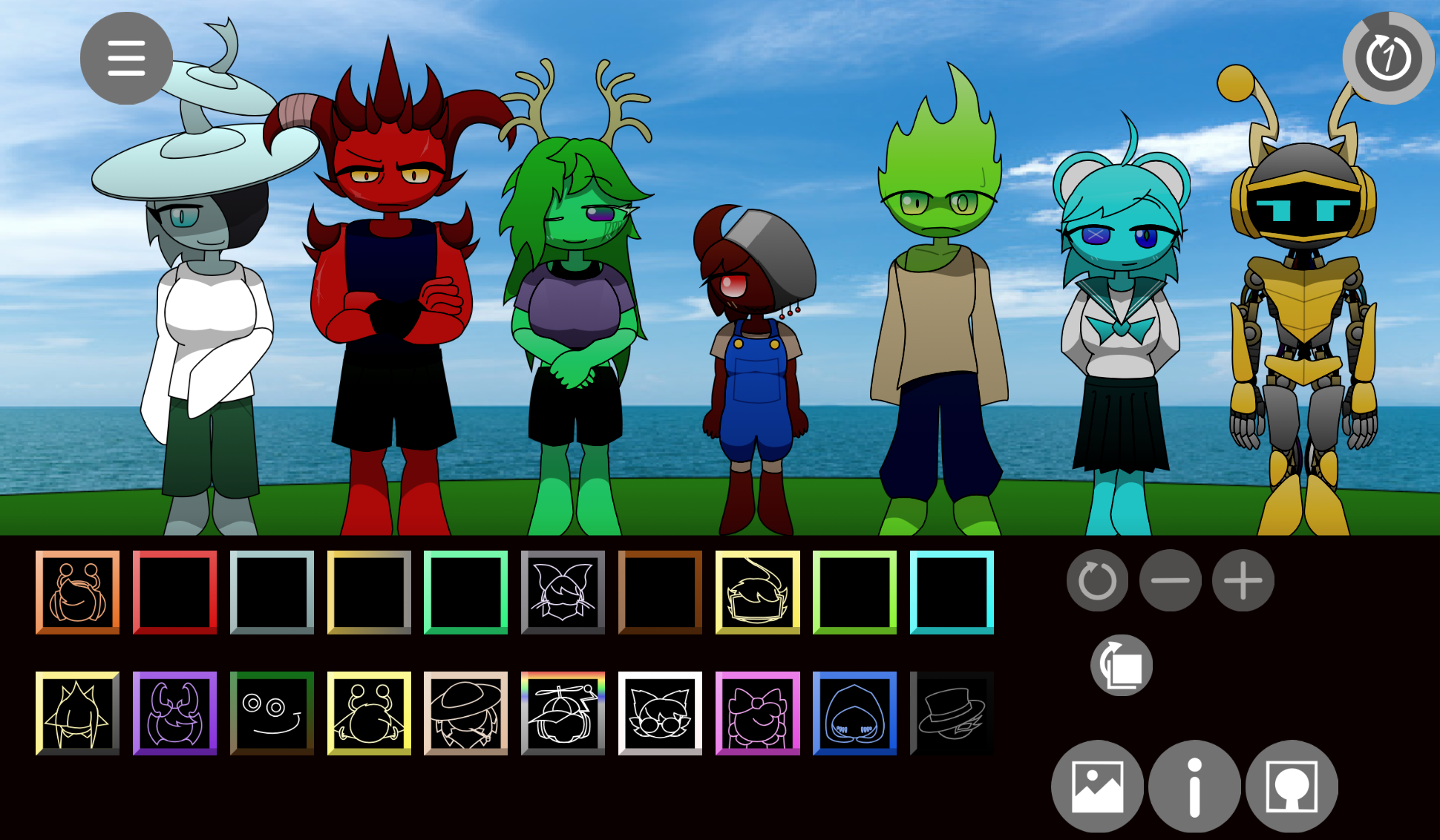
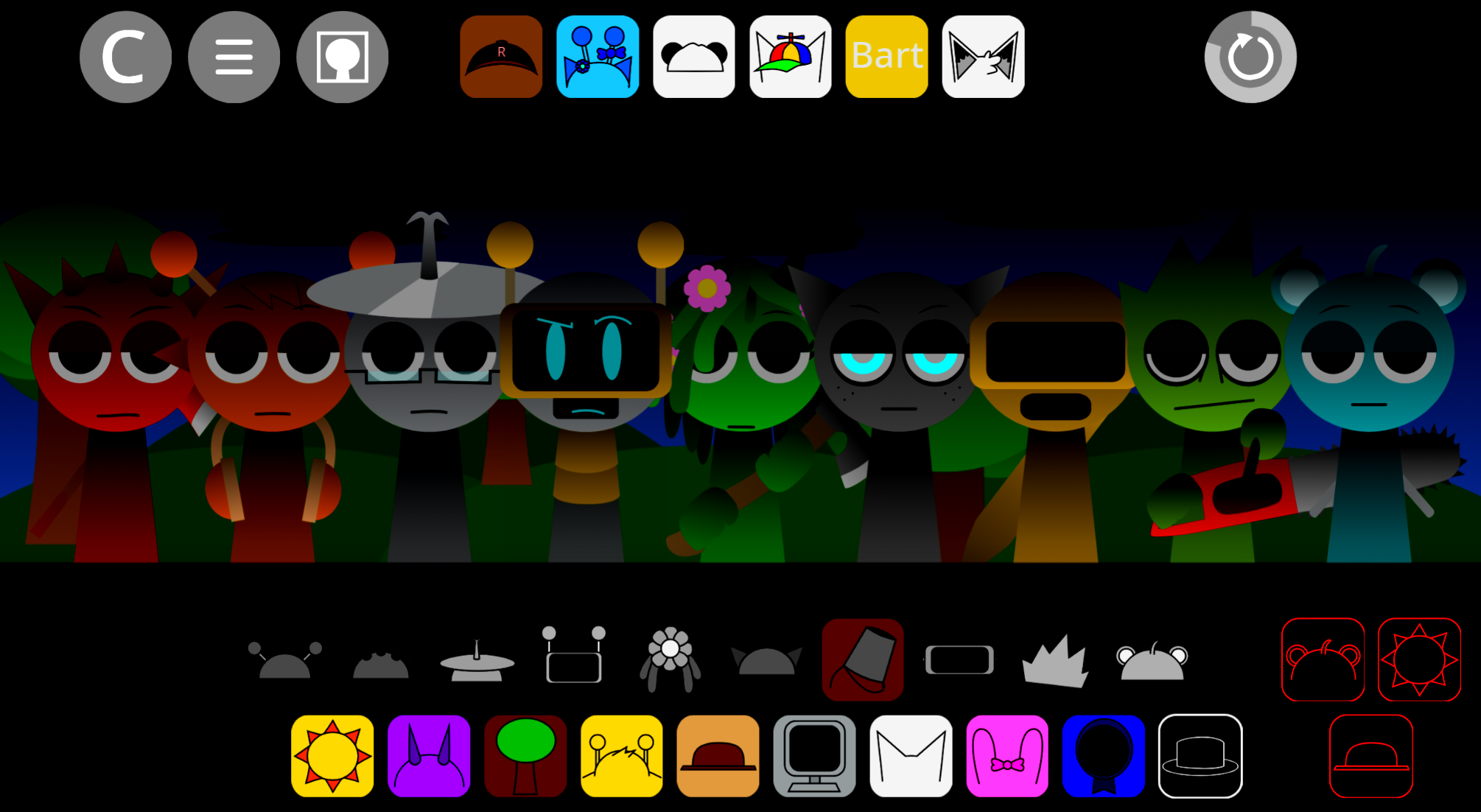
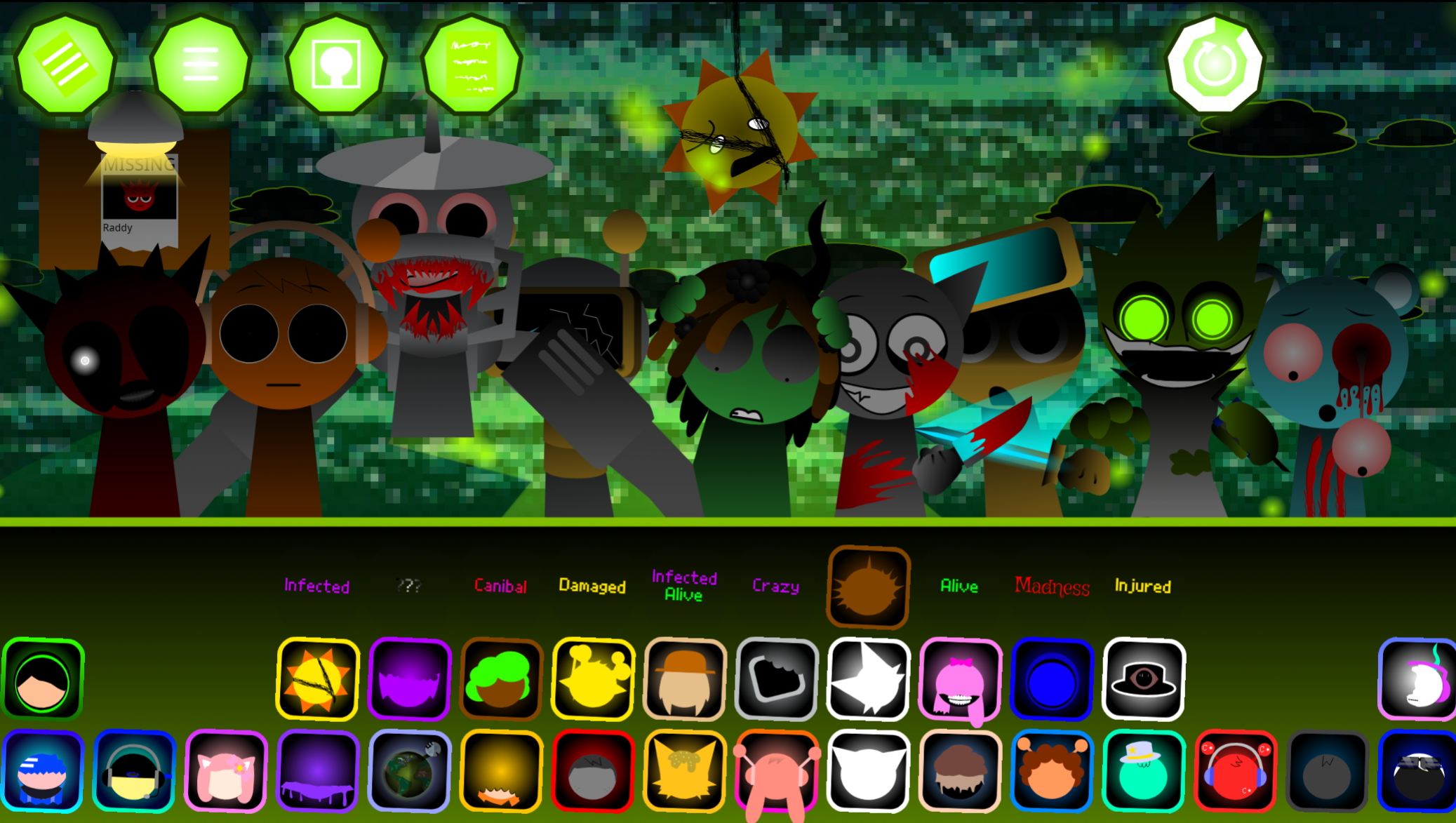
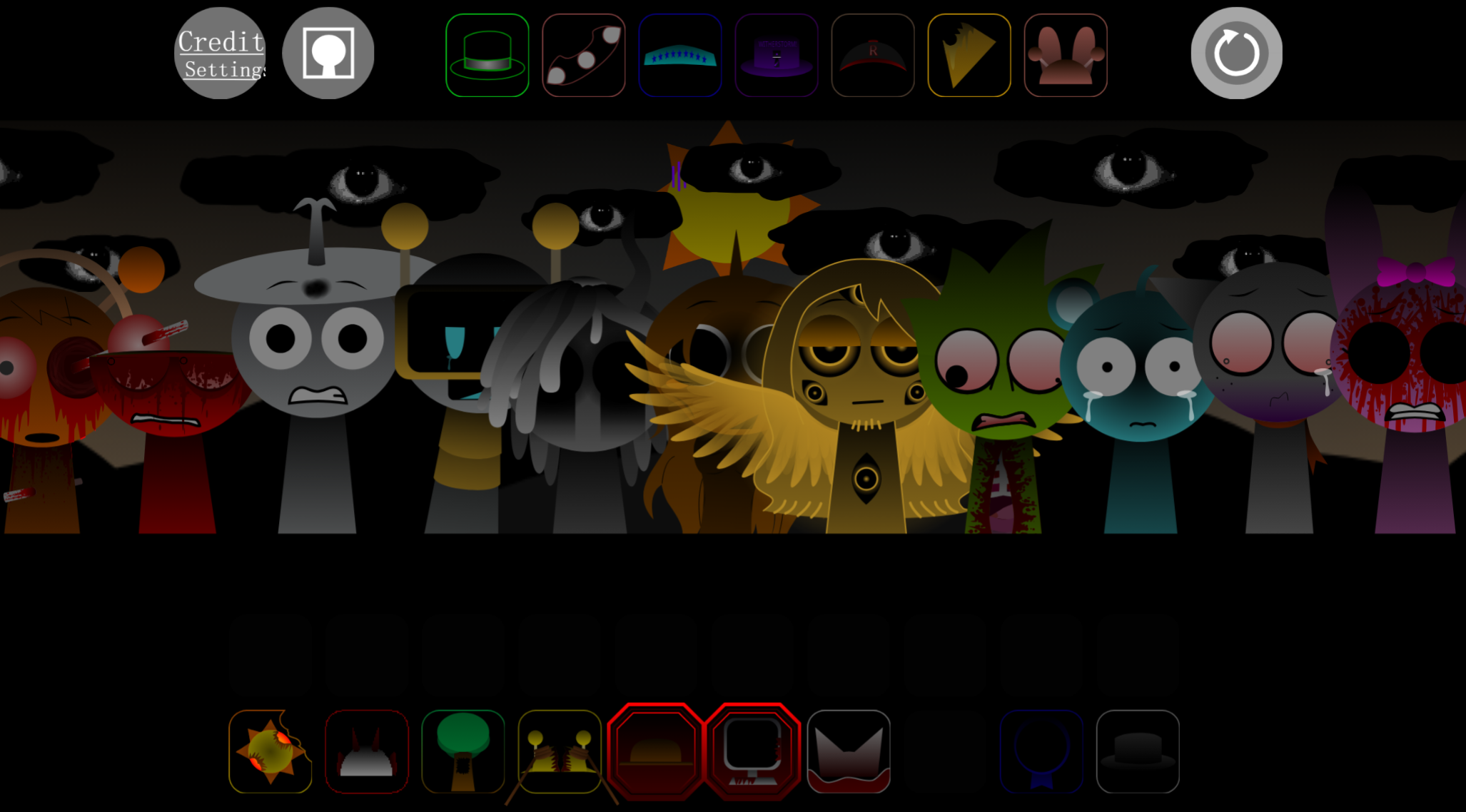
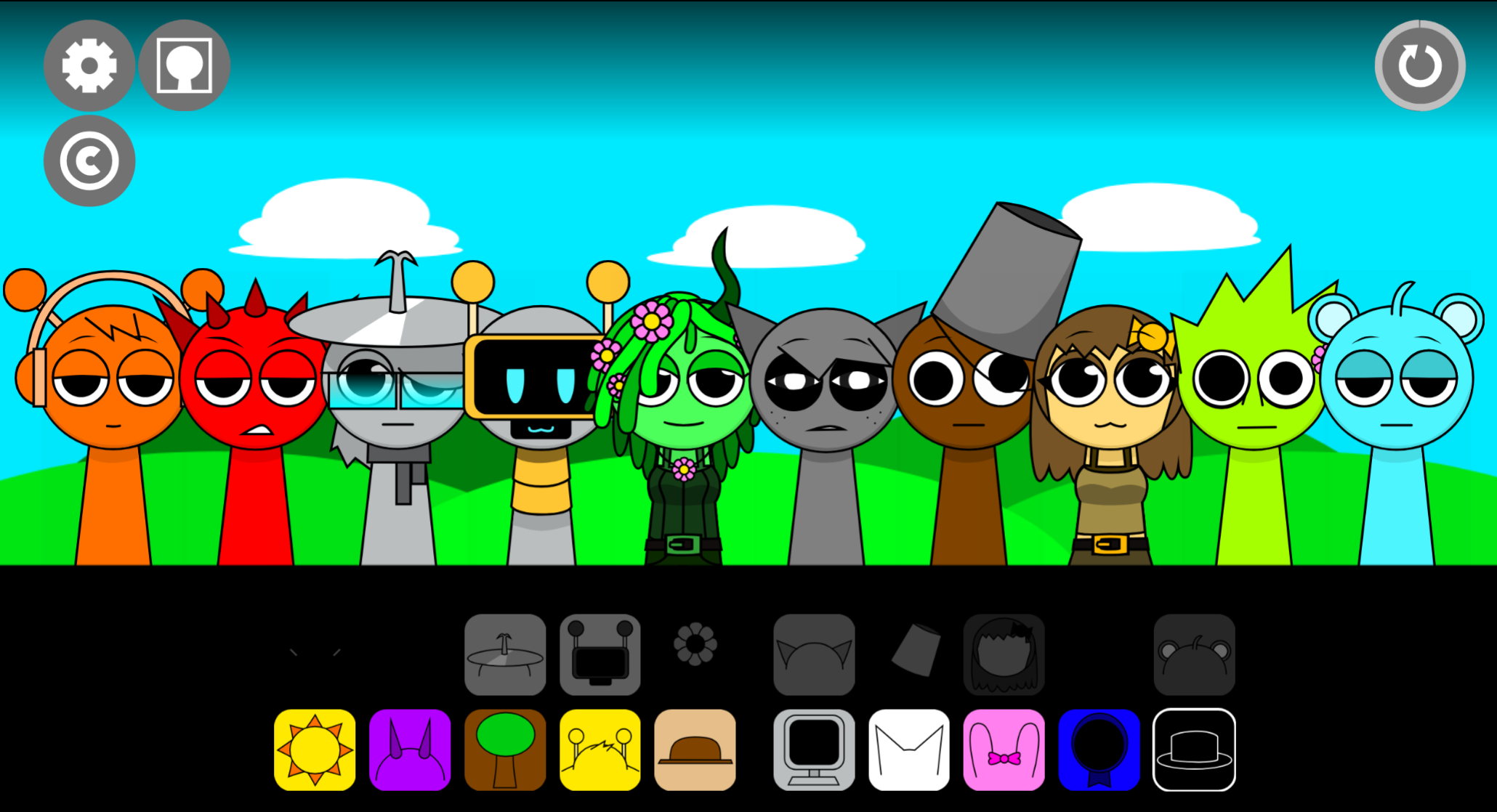
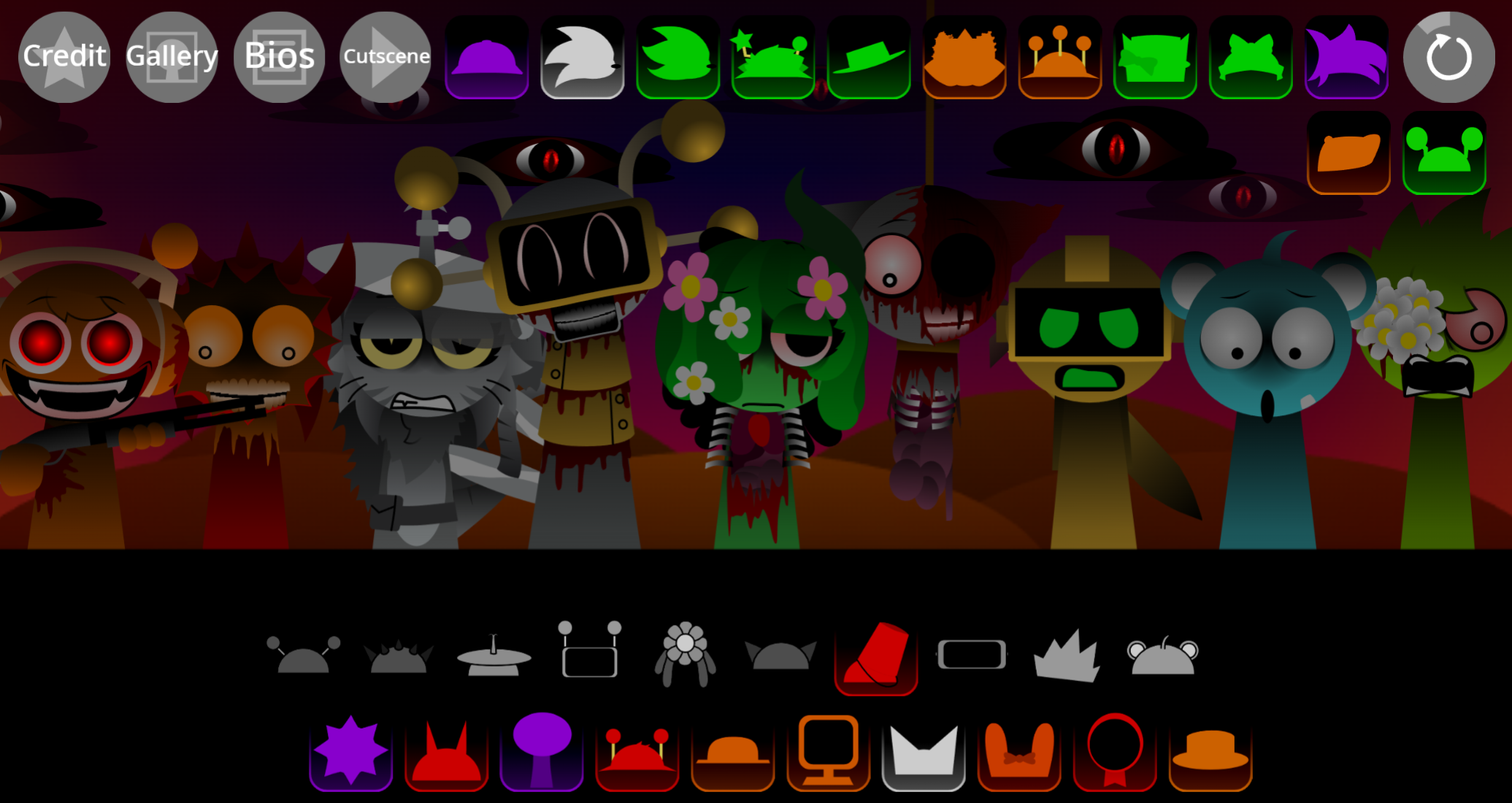
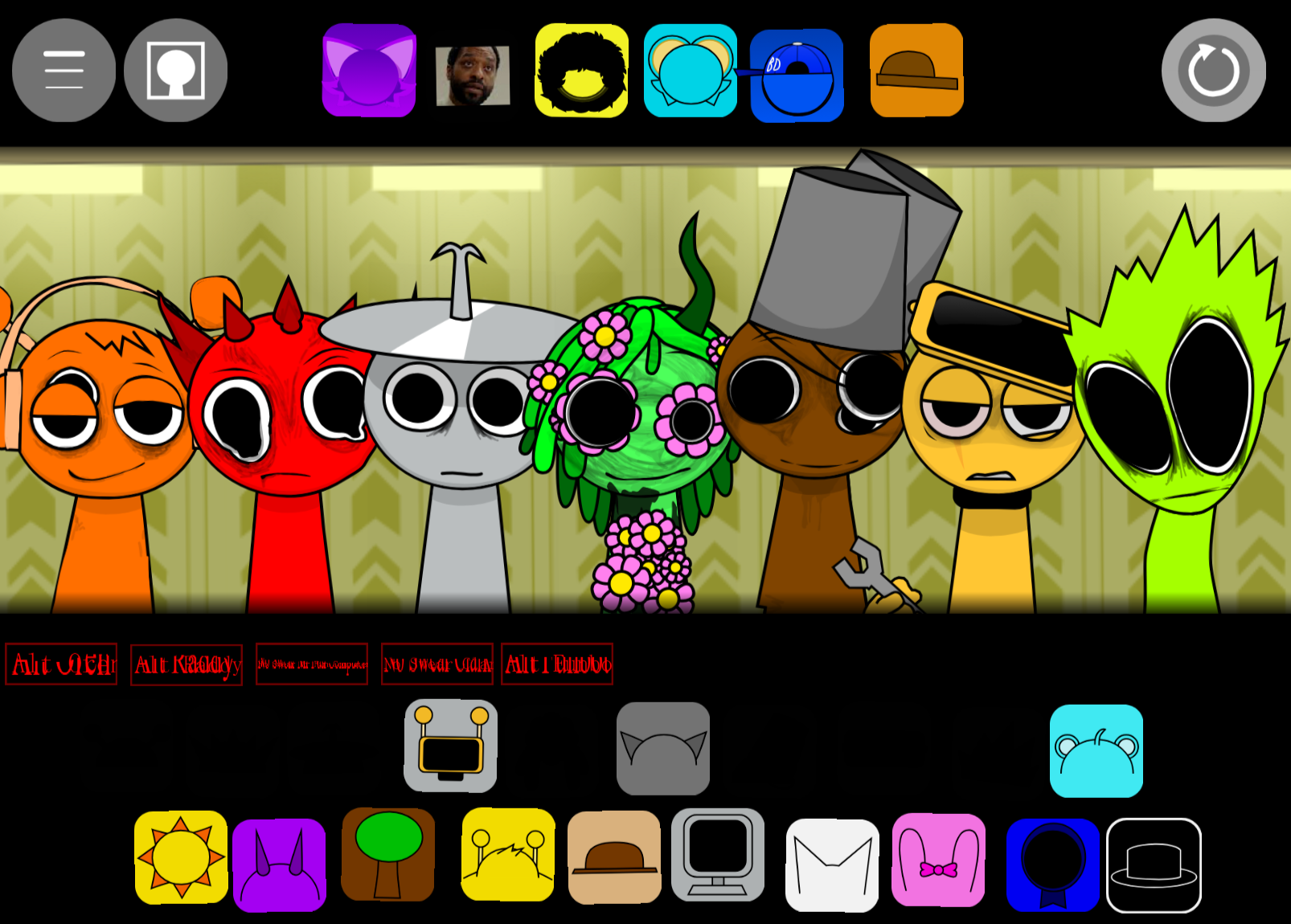
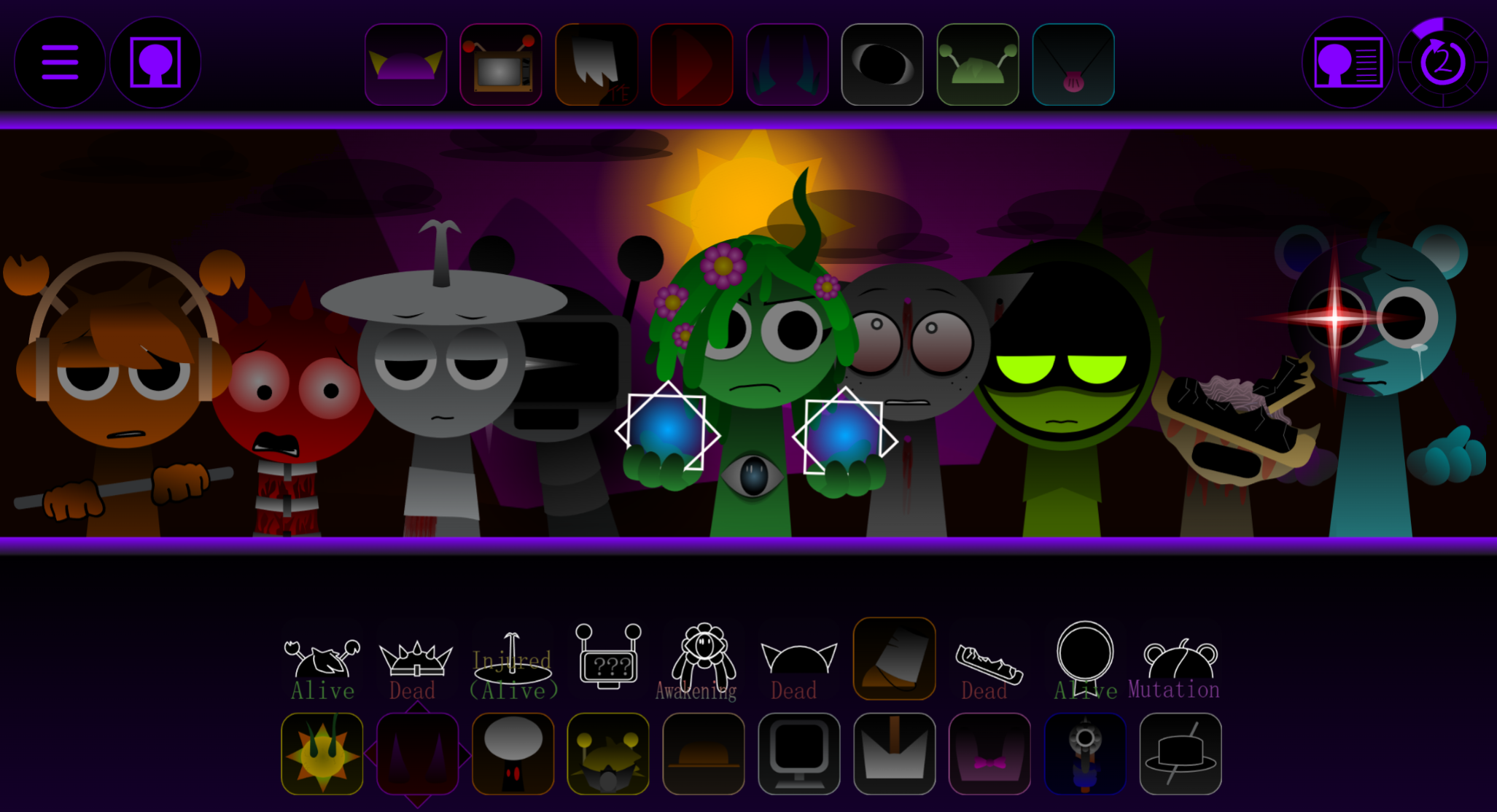
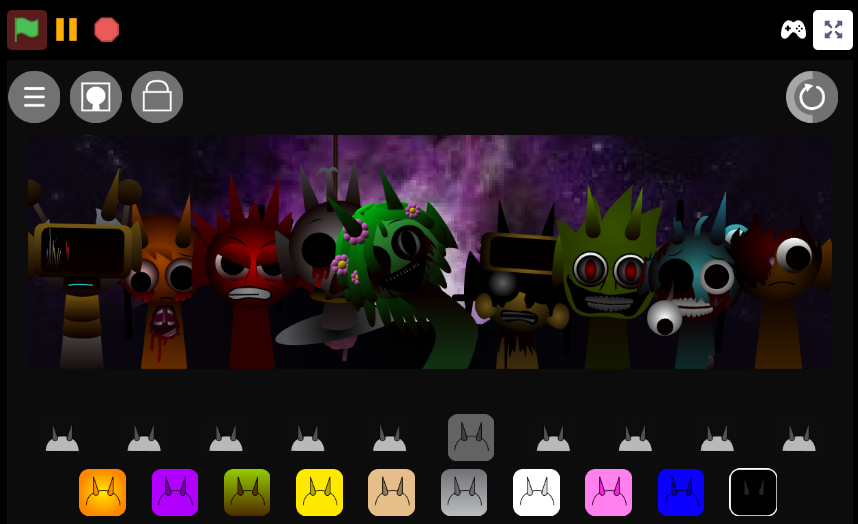
Sprunki My Friends Beters And Loses Phase 4 is a stripped-down mod that cuts the roster to four surviving characters—Jevin, Pepper, Tinky-Tank, and Hans—and forces you to build tracks with limited sound options in a visibly darker setting.
This phase removes the safety net of a full character lineup, so every loop placement and timing choice carries more weight than in earlier Sprunki phases. The visual shift to corruption and loss changes how the interface feels, but the core mechanic stays the same: drag characters onto slots, layer sounds, and aim for cohesive loops.
You’ll also find practical details on unlocking content, managing the darker UI, and whether Phase 4 fits your preferred Sprunki playstyle.
Sprunki My Friends Beters And Loses Phase 4
Sprunki My Friends Betters And Loses Phase 4 strips the roster down to four survivors: Jevin, Pepper, Tinky-Tank, and Hans. The usual twenty-character soundboard is gone. Every loop, vocal layer, and drop now has to earn its place because there are no extra sounds to hide weak choices.
Instead of filling slots randomly, you build with restraint. Jevin typically anchors the rhythm, Pepper shifts the mood, Tinky-Tank adds pressure, and Hans creates contrast. The missing characters are not a bug—their absence is the design.
The stage feels darker and more isolated, turning beat-building into a focused survival puzzle where silence carries weight and every placement matters.
The first adjustment is mental: stop treating this like a normal full-roster setup. The empty slots are intentional. Start with Jevin for a stable baseline, then add Pepper to test the emotional shift. Bring in Tinky-Tank and Hans one at a time. Do not rush all four onto the stage immediately. In this phase, silence is pressure not dead space.
Fewer characters mean fewer distractions but also fewer ways to cover mistakes. If the mix feels muddy or flat, strip it back to Jevin and rebuild slowly. The best runs come from listening carefully after every placement, not from random stacking.
How to Play Sprunki My Friends Betters And Loses Phase 4
Choose from the four survivors—Jevin, Pepper, Tinky-Tank, and Hans—then drag them onto the stage slots to build your mix. The basic Sprunki structure is familiar, but the reduced roster changes how you should approach every decision.
Place Jevin first.
Let his rhythm run for a full cycle so you can hear the timing, weight, and mood of the baseline.
Add Pepper second.
Use Pepper as a mood shift rather than a random extra layer. Listen for whether the sound sharpens the rhythm, darkens the atmosphere, or creates a lift.
Bring in Tinky-Tank carefully.
Tinky-Tank adds texture, but the smaller roster makes every added sound more exposed.
Use Hans to test contrast.
Hans changes the feel of the mix depending on when you introduce him. Try placing him later instead of immediately filling the stage.
Pay attention to how each vocal line, beat, and effect reacts when another character joins. In bigger Friends lineups or louder Betters-style mixes, random layering can work. Here, messy placement becomes obvious quickly because there are fewer sounds to hide behind.
If you are new to Sprunki, this phase is a useful training ground. The limited setup lets you learn timing, layering, tension, and release without being buried under twenty competing options.
Survivor Mixing Mechanics
The Survivor Mixing Mechanics revolve around the four-character roster. By shrinking the soundboard to Jevin, Pepper, Tinky-Tank, and Hans, the phase turns freeform chaos into a tighter music puzzle.
Each survivor has a different role:
- Jevin works best as the rhythmic spine. His loop gives the track a stable pulse.
- Pepper changes the emotional color of the beat, making the mix feel sharper, darker, or more expressive.
- Tinky-Tank adds pressure and texture, helping the track feel heavier or stranger.
- Hans creates contrast and instability depending on when he enters the arrangement.
The missing characters matter mechanically because they create gaps. Those gaps force you to build tension through restraint instead of volume. In a full Sprunki soundboard, you can stack sounds quickly and wait for something exciting to happen. In Phase 4, that approach often flattens the track. The better method is to let each layer breathe before adding the next one.
Think of the phase as a survival mix: you are not trying to make the loudest beat possible, but the cleanest and most intentional one.
Tactical Tips for Minimalist Beats
To create stronger Minimalist Beats in Sprunki My Friends Beters And Loses Phase 4, treat the smaller soundboard like a pressure chamber. Every loop matters, every pause matters, and every added layer should change the track for a reason.
Lock in Jevin first.
Jevin should usually be your starting point. Let the baseline settle before adding anything else. The first sound defines the pulse and mood of the entire mix.
Add Pepper slowly.
Pepper works best when introduced after the beat has room to breathe. Drop Pepper in once Jevin’s rhythm feels established, then listen through a full cycle before deciding whether the track needs another layer.
Test one layer at a time.
Minimalist beats punish careless stacking. Add Tinky-Tank or Hans individually, then decide whether the new sound strengthens the mix or muddies it. If the rhythm starts feeling crowded, remove a character instead of forcing more sound into the track.
Use silence tactically.
Do not fill every available moment. Holding back a layer can make the next drop feel sharper and more controlled. Restraint creates tension.
Reset when the mix loses shape.
If everything starts blending together, go back to Jevin alone. Rebuilding from the baseline is faster than trying to fix a clutered four-character stack.
Listen for hidden harmony in the gaps.
The strongest combinations often come from small shifts rather than huge drops. Let the empty space between loops do some of the work.
The Four Survivors and Visual Upgrades
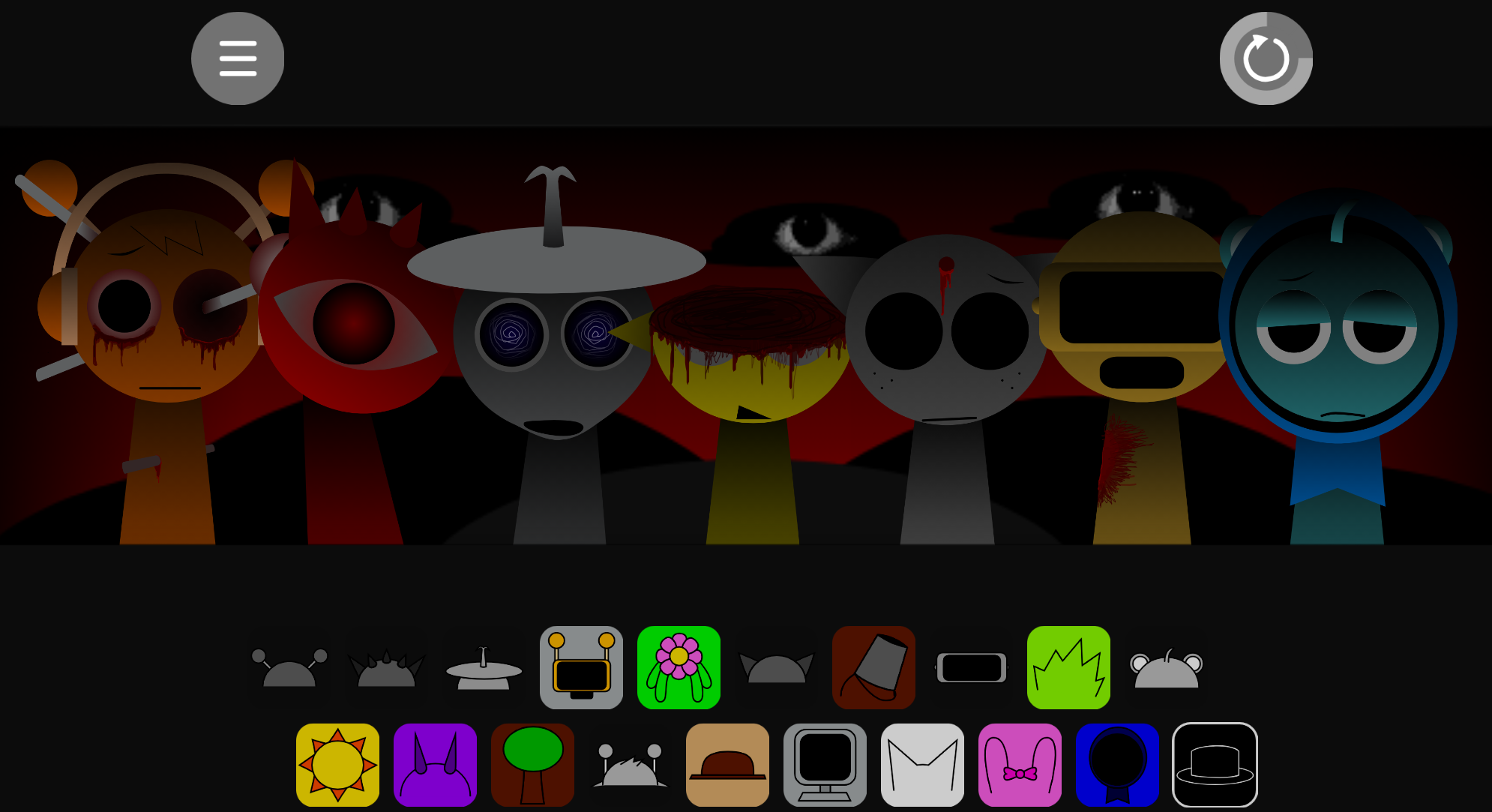
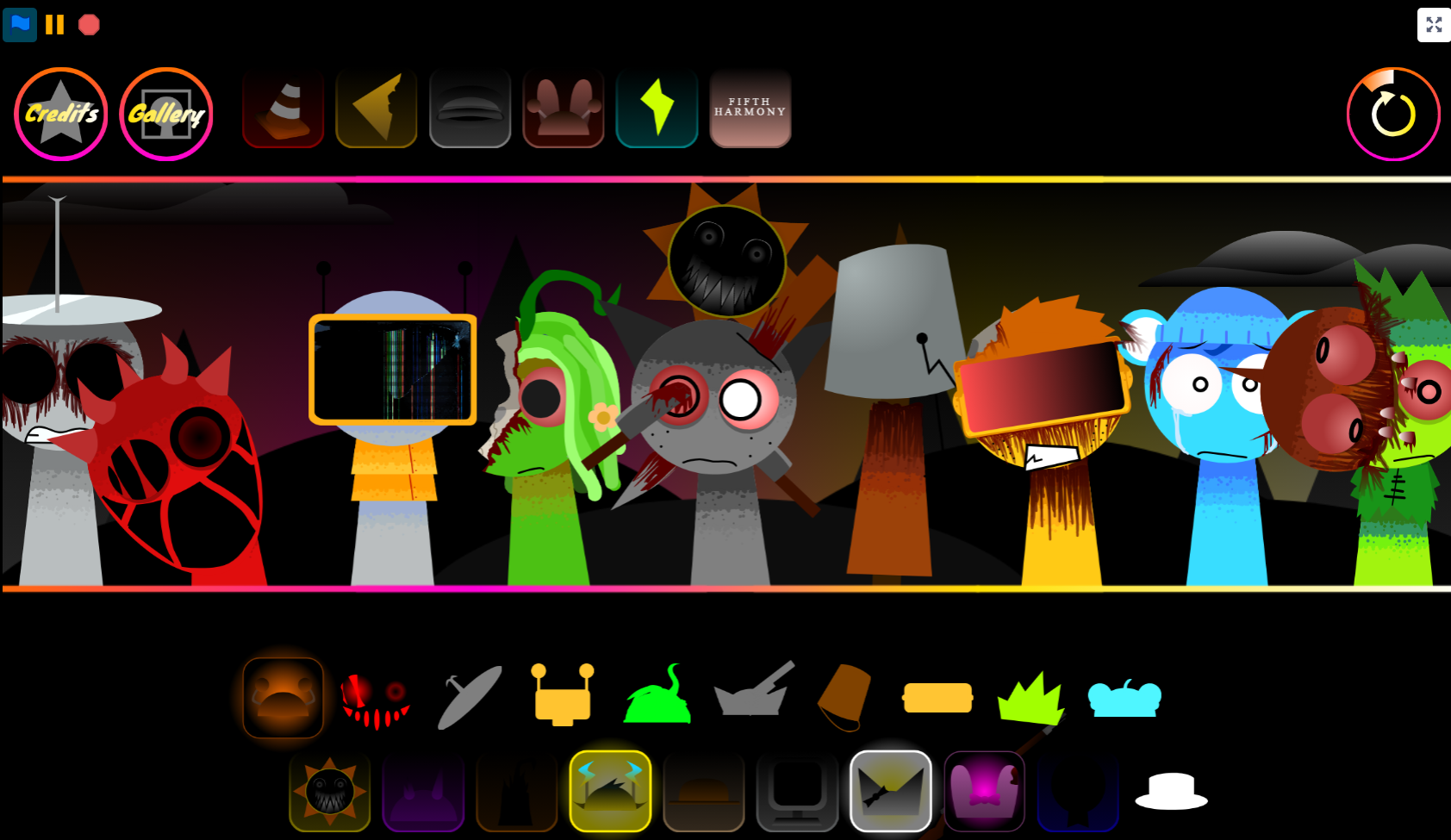
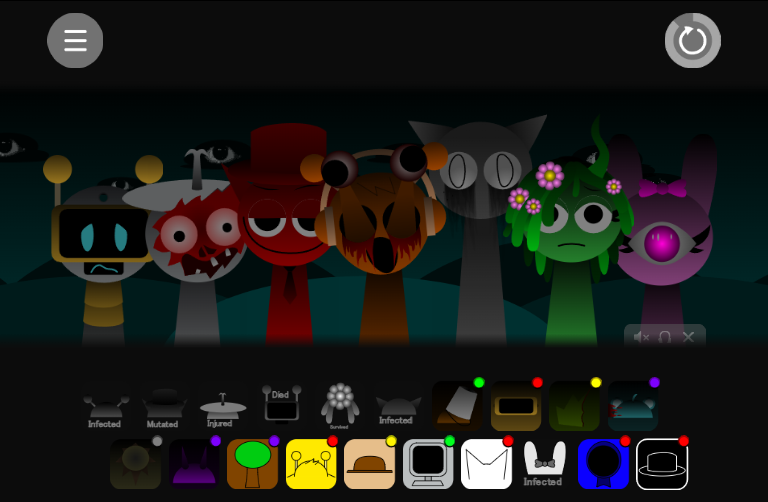
The four survivors—Jevin, Pepper, Tinky-Tank, and Hans—define both the gameplay and the visual tone of the phase. Instead of the usual twenty-character lineup, the screen leaves you with only four faces still standing. That absence makes the character select screen feel intentionally ruined rather than unfinished.
The visual upgrade leans into a darker, stripped-back presentation. Smoother animation, cleaner lighting, and more polished effects make the survivors stand out against the minimalist setup. Because there are fewer characters on screen, each placement feels more deliberate. The phase uses emptiness as atmosphere: less noise, fewer icons, and more pressure on every choice.
This also strengthens the “Betters And Loses” concept. The missing Friends are not just gone from the roster—they are felt in the rhythm. Every loop carries more weight because you are building music out of what remains. Jevin, Pepper, Tinky-Tank, and Hans become the emotional center of the mod, turning a small soundboard into a darker survival performance.
From a gameplay angle, the visuals support the mechanics. The clearer focus helps you track each survivor’s contribution, while the darker tone reinforces the need to play carefully. You cannot bury a weak rhythm choice under a crowded stack, so every survivor has to justify their place in the beat.
Related Games
- Sprunki Betters And Loses Phase 4 Official — This is the closest follow-up because it centers on the same Phase 4 tragedy, survivor-focused roster, and darker beat-building atmosphere described in the article.
- Sprunki Betters And Loses But Phase 3 — Phase 3 is a useful next play if you want to compare the earlier roster and mood before the Phase 4 wipe turns the mix into a minimalist survival scenario.
- Sprunki Betters and Loses Phase 5 Namdhs Take — Phase 5 works as a strong next-click for players who want to see how the lore and sound design evolve after Phase 4’s bleak survivor setup.
Why Play Sprunki My Friends Betters And Loses Phase 4?
Play Sprunki My Friends Betters And Loses Phase 4 if you want a darker, tighter Sprunki experience where careful sound choices matter more than full-roster chaos. This phase turns beat-building into a survival exercise: only Jevin, Pepper, Tinky-Tank, and Hans remain, and every loop has a visible impact on the final mix.
The stripped-back design is the strongest reason to play. Instead of throwing sounds together until something works, you study how each survivor changes the track. Jevin locks the rhythm, Pepper shifts the mood, Tinky-Tank adds pressure, and Hans creates contrast. The result feels less random and more tactical.
It is also strong for players who enjoy eerie Sprunki lore and atmosphere. The empty space on the roster changes the emotional weight of the game. The stage feels quieter, the visuals feel heavier, and the music becomes less about abundance and more about survival.
For beginners, the limited roster reduces distractions, making it easier to understand core Sprunki mechanics: timing, layering, balance, tension, and release. For experienced players, Phase 4 tests whether you can make a compelling mix without relying on scale, noise, or constant stacking.
Discuss
Loading comments...
Failed to load comments. Please try refreshing the page.